If ever the dead

If ever the dead were to be recalled/ it would be in [a] voice flung confident/ into the raving light.

“The Silence,” from Cardinals in the Ice Age, by John Engels

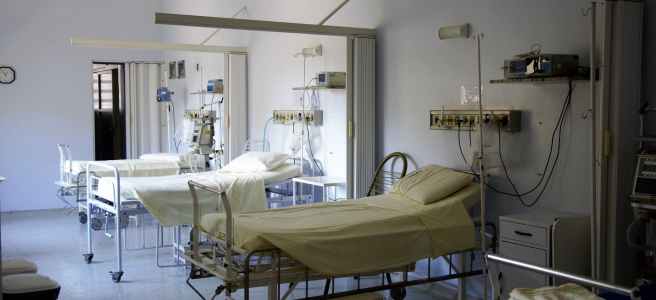
At the hospital, a member of the staff came swiftly into the room to check Dad’s unconsciousness. She touched him, looked into his eyes, and called out in lifted voice,  “Robert! Robert!”

My heart clenched. That was the name of his dead brother. 

I didn’t fear Robert would be recalled to life, still aged twenty after four decades of death. But I could imagine my uncle’s spirit, matured and paternal, surfacing through the years and distance from the mountains of Korea. He would appear in the far corner of the hospital room, first with a blank expression, wondering who had called his name with such command. Then in the next moment he would go to the foot of Dad’s bed. With great and wise tenderness he would gaze at his brother’s face, catching up with the changes. Robert would size up the situation and move toward the sleeping form. With surprising strength, he would lift Dad decisively, making him ten years old again before my eyes.

Then, without one look toward me, Robert would bear my father away. 

The end of summer

The black walnut tree across from my kitchen window always signals the end of the summer before any other signs appear. It feels premature, the green orbs falling to the paved street. They’re a bit smaller than tennis balls, leathery, firm. They pop when a car tire runs over them. They make a soft “pock” when they hit the ground. I never knew black walnut trees until I moved to this house, nearly 30 years ago, now. I didn’t know how slow they were to admit spring, and quick to acknowledge autumn.

The other early sign of the end of summer comes from people. So many tend to jump ahead, prompted perhaps by the commercial advertising on all forms of media, telling us we must prepare for what is still weeks, if not months, away. I am frustrated by this hyper-speed leap into what will come next. What about the now? For me, advertising is so pushy. When I see beach ads in winter, or snow ads in summer, I’m compelled into a yearning for something other than the present. That’s not how I wish to be.

The end of summer is bittersweet: the loss of sun, of the sense of freedom that warmth and lighter clothing give, the return of school schedules promising new mental expansion. I always loved school, with new pencils and books, but still the loss of summer made me sad. It’s hard to sit here at the point of pivot, to be just here and witness the change.

Writing for my father

Dad died when I was 27. That’s when I began to write for him.

What I wanted – or needed – to do was to write his story before it disappeared from the world. In that sense, I wrote in his stead, rather than for him as in having him as listener or reader. A poem I wrote at that time was “Song for my father,” in which I acknowledged that I wanted to vocalize his words, but I knew I could only do my own keening for his loss.

My dad was so unremarkable, so unheroic, that when Sinatra’s “My Way” was played over the audio at Dad’s funeral it was almost laughable. About the only thing my father did “his way” was his death. He literally died in his sleep, in a coma, but I’ve always believed it was suicide by stroke. The second day after he was found unconscious, I had a talk with Dad in my head. “You’ve been looking for a way out, Dad. Here’s your window. Take it.” It wasn’t what I wanted, but the doctor said the stroke left him “no quality of life” even if he continued to live. And Dad had prepared his three daughters for years – since we were children – with his expectation of an early demise. For no particular reason, he didn’t expect to live longer than his father, who died at 45. Dad paved the way with self-denial, depression, and lack of hope. He gave me a great deal of love, but his quality of life had already become very low when he managed to slip out of that open window.

So I wrote for Dad. He had actually made a few notes in the last year of so of his life, prodded by conversations with me. He even spoke to me in the notebook. What he wrote echoed his sense of uselessness and lack of direction in life. I wrote for Dad in hopes of filling in the blanks left behind. I wanted to show the value in his life, for me in particular, and in the way all individual human lives are valuable. I wanted to express how I could accept his absence because I loved him so much, and what it was about him that I loved. I remember standing next to his hospital bed after he died, whispering, “Okay, okay; it’s okay.” It felt as if he’d become my child rather than my father, and I was overcome with tenderness and the desire to reassure him that his daughters would be all right. That I would be all right.

That night I was ill. The day of the funeral my anxiety was enormous. As our car followed the gray hearse through the streets of Detroit, I sat between my sisters hardly able to breathe. At the graveside a spider navigated the green AstroTurf beside my foot. Spiders had always terrified me. I thought I could become hysterical, and then realized, “If I let myself become a basket case in my grief, it won’t honor my deep love for Dad.” I managed to pull away from the worst of it, but stayed desperate to write for my father, to try to find the meaning in his existence, to discern the real truth of his short life.

I’m still writing.

lifeinonescene

I crouch on a carpeted step where the stairway ends in the kitchen. I’m near the bottom, with my curly-haired little sister below me. Above me, I can just sense my older sister’s breathing, as if she’s invisible.

My father speaks: “I’m not going to be living here any more.” My legs press against the scratchy, low-pile synthetic carpet, dark brown. Do I smell the vomit of those nights when my sister threw up on the stairs? My mouth is filling with saliva. Do I want to vomit, or to cry? My eyes are burning, dry.

I think my head is pounding with the thud of my heartbeat. I’m afraid I won’t be able to hear what Dad is saying.

I have words in my mouth but I know I’m not supposed to say them. Dad is the one who is supposed to talk. I know this, because Mom is quiet. He is not saying enough, so she is glaring at him. He is not saying enough for me to understand what this means.

“I’m not going to be living here in this house with you any more.” I am smothered by the vague smell of vomit. The stairway feels like a tunnel and the space is getting too tight, closing in. It’s like a dream where I’m pinned in place; I can’t go up or down.

Praise piece based on Joy Harjo

Praise the darkened rooms.

Praise the empty-handed father

sitting in the early morning dark.

Praise the unfilled wished for love

from open-handed father,

and the clenched fist of the mother.

When your sternum is tender

with sadness, whether from today’s

death count or the emptiness of 1975,

place your own cupped hands

before your heart. Praise sadness.

Praise the ability to breathe,

praise the breaths you wished to take

to fill the lungs of your second father.

Praise his death,

and his humble willingness

to stop breathing. Praise

his completed Income Tax forms,

neatly sealed in an envelope

sitting ready on the piano.

Praise this strange year

when the deadline is extended

out to July.

Praise not knowing what

summer will bring, and not knowing

how, and how many of us,

will arrive.

Praise the notion you’ve had

of the Great Flood, the one you don’t believe in,

that was a way to curb the bad,

to purge the overflow. You’re not

the only one to ponder at the drowning,

hundreds each day now,

of the ones in hospital beds or

not in beds,

the ones who are humbled,

and those who were certain

they weren’t meant to be drowned.

Praise the ancient test of evil,

the crushing beneath a board and stones,

the present punishment of lungs

imposed on all, whether or not

they be witches.

Praise the bearing witness to lives

crushed or those who will crush

your own, to the purging of the

good and pure, the breath, the heart.

Praise your own cupped,

good, empty hands before you.